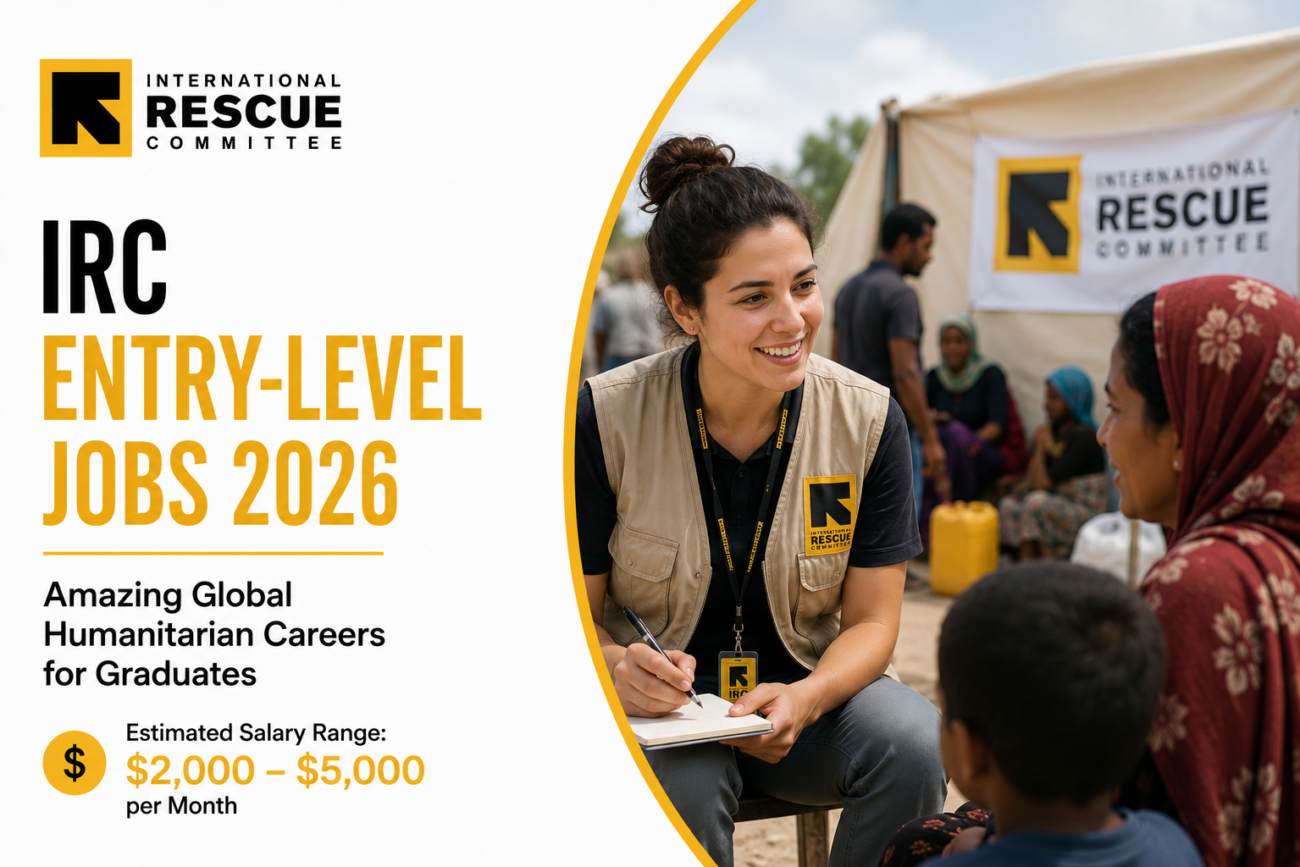
Discover IRC Entry-Level Jobs 2026 for graduates and young professionals. Explore humanitarian career opportunities with the International Rescue Committee, competitive salaries, professional development, and global impact.
Overview
The humanitarian sector continues to expand as organizations respond to displacement crises, conflict, climate emergencies, economic instability, and growing global development challenges. Among the most attractive opportunities for graduates and early-career professionals are entry-level positions with the International Rescue Committee (IRC).
IRC Entry-Level Jobs 2026 offer an excellent pathway into humanitarian and international development careers while providing valuable professional experience, career growth opportunities, and the chance to make a meaningful difference in people’s lives.
With operations in more than 40 countries and numerous communities worldwide, the International Rescue Committee remains one of the most respected humanitarian organizations globally. The organization regularly recruits talented individuals to support programmes that assist refugees, displaced populations, vulnerable communities, and people affected by crises.
About the International Rescue Committee
The International Rescue Committee (IRC) responds to the world’s worst humanitarian crises and helps people survive, recover, and rebuild their lives.
Founded in 1933, IRC works across multiple sectors including:
- Emergency response
- Health and nutrition
- Education
- Economic recovery
- Women’s protection and empowerment
- Child protection
- Refugee resettlement
- Community development
- Livelihood support
- Humanitarian assistance
The organization’s mission is to help individuals whose lives have been disrupted by conflict, disaster, or displacement regain safety, dignity, and self-reliance.
Why IRC Entry-Level Jobs Are Popular
Many graduates and young professionals are attracted to IRC because it combines professional development with meaningful impact.
Key advantages include:
- Exposure to international development work
- Opportunities to support vulnerable communities
- Career advancement pathways
- Strong organizational reputation
- Diverse and multicultural work environments
- Access to training and mentorship programmes
- Opportunities for global mobility
Unlike many traditional entry-level jobs, IRC roles often allow employees to see the direct impact of their work on communities and individuals.
Types of Entry-Level Jobs Available
IRC recruits entry-level professionals across multiple departments and programme areas.
Programme Assistant
Programme Assistants support project implementation and operational coordination.
Responsibilities may include:
- Scheduling activities
- Maintaining programme records
- Assisting with reporting
- Supporting field operations
- Coordinating stakeholder communication
Administrative Assistant
Administrative professionals help ensure efficient office operations.
Typical responsibilities include:
- Managing documentation
- Scheduling meetings
- Handling correspondence
- Coordinating logistics
- Maintaining records
Human Resources Assistant
HR Assistants support recruitment and employee management processes.
Responsibilities often include:
- Candidate screening
- Interview coordination
- Employee onboarding
- Personnel records management
- Staff engagement activities
Finance Assistant
Finance Assistants help maintain financial accountability across programmes.
Key tasks may include:
- Processing payments
- Financial reporting
- Budget tracking
- Expense verification
- Record keeping
Monitoring and Evaluation Assistant
M&E professionals help organizations measure programme effectiveness.
Responsibilities may include:
- Data collection
- Database management
- Reporting support
- Performance tracking
- Research activities
Community Engagement Officer
Community-based positions involve direct interaction with beneficiaries and local stakeholders.
Responsibilities often include:
- Community outreach
- Awareness campaigns
- Stakeholder engagement
- Programme participation support
- Feedback collection
Educational Requirements
Most IRC entry-level positions are open to graduates from a wide range of academic backgrounds.
Common fields of study include:
- International Relations
- Development Studies
- Public Administration
- Social Sciences
- Political Science
- Public Health
- Business Administration
- Human Resources
- Accounting
- Finance
- Communications
- Information Technology
- Education
Recent graduates are often encouraged to apply.
Skills Required for Success
Candidates interested in IRC careers should focus on developing both technical and interpersonal skills.
Communication Skills
Strong written and verbal communication abilities are essential for collaborating with colleagues, partners, and communities.
Teamwork
Humanitarian work relies heavily on cooperation across departments, countries, and cultures.
Problem-Solving Ability
The ability to identify challenges and develop practical solutions is highly valued.
Adaptability
Humanitarian environments can change rapidly, requiring flexibility and resilience.
Digital Literacy
Candidates should be comfortable using:
- Microsoft Office Suite
- Online collaboration tools
- Databases
- Reporting platforms
- Virtual communication systems
Organizational Skills
Strong planning, prioritization, and time management skills are critical for success.
Estimated Salary Range
Compensation varies depending on:
- Country of assignment
- Position type
- Funding source
- Local labor market conditions
Estimated salary ranges for entry-level positions generally fall between:
USD $2,000 – $5,000 Per Month
Some locations may offer additional benefits depending on contract terms and operational requirements.
Benefits of Working at IRC
IRC offers a range of professional and personal development benefits.
Professional Development
Employees often receive:
- Training opportunities
- Skills development programmes
- Leadership development support
- Professional mentoring
Career Growth
Many professionals who begin in entry-level positions advance to:
- Programme Officer
- Human Resources Officer
- Finance Officer
- Grants Officer
- Monitoring and Evaluation Officer
- Project Coordinator
- Programme Manager
- Technical Advisor
International Exposure
Employees gain experience working in multicultural environments alongside experts from around the world.
Meaningful Impact
One of the greatest rewards is contributing to programmes that improve lives and strengthen communities.
Remote and Flexible Opportunities
As workplace models continue to evolve, some IRC positions may offer:
- Remote work arrangements
- Hybrid work options
- Flexible schedules
Availability depends on programme needs and operational requirements.
These flexible opportunities have increased the appeal of IRC careers among graduates and early-career professionals.
How to Strengthen Your Application
Competition for humanitarian positions can be significant. Candidates can improve their chances by taking the following steps:
Tailor Your Resume
Customize your CV for each vacancy and highlight relevant experience.
Emphasize Volunteer Experience
Volunteer activities often demonstrate commitment to service and community engagement.
Showcase Transferable Skills
Highlight:
- Leadership experience
- Project coordination
- Research skills
- Administrative support
- Data management
- Community engagement
Write a Strong Cover Letter
Explain your motivation for joining the humanitarian sector and how your skills align with the role.
Prepare Thoroughly for Interviews
Research humanitarian trends, IRC programmes, and the organization’s mission before interviews.
Why Consider a Humanitarian Career?
Humanitarian organizations increasingly need talented professionals who can support complex programmes and respond to evolving global challenges.
IRC careers provide opportunities to:
- Build professional expertise
- Develop leadership skills
- Contribute to positive social change
- Gain international experience
- Support vulnerable populations
For many professionals, humanitarian work offers both career fulfillment and personal purpose.
Final Thoughts
IRC Entry-Level Jobs 2026 represent an excellent opportunity for graduates and young professionals seeking meaningful careers in humanitarian assistance and international development. With opportunities across administration, finance, human resources, programme support, monitoring and evaluation, and community engagement, candidates from diverse backgrounds can find pathways into the sector.
As global humanitarian needs continue to grow, IRC remains a leading employer for professionals who want to combine career development with real-world impact. By building relevant skills, gaining practical experience, and preparing strong applications, candidates can position themselves for success in one of the world’s most respected humanitarian organizations.
SEO Keywords
IRC Entry Level Jobs 2026, International Rescue Committee jobs, humanitarian careers 2026, NGO jobs for graduates, international development careers, IRC programme assistant, IRC administrative assistant, humanitarian jobs worldwide, refugee support jobs, NGO entry level jobs, monitoring and evaluation assistant jobs, humanitarian organization careers, development sector jobs, international NGO careers, IRC recruitment 2026, graduate humanitarian jobs, community engagement officer jobs, nonprofit careers, humanitarian assistant jobs, global development opportunities
